
The UAE Real Estate Boom (2001–2008)
The early 2000s marked the beginning of a new world for UAE real estate. Before 2001, Dubai and Abu Dhabi were growing, but nothing compared to the revolutionary changes that would soon reshape the region. The landscape consisted mostly of mid-scale residential buildings, government-led projects, and limited private development. The idea of foreigners owning property was still new, viewed with caution, and mostly restricted. But everything changed in 2001, when the UAE leadership introduced long-term lease options for foreigners — a move that sparked global curiosity.
However, the real turning point came in 2002, when Dubai introduced freehold property ownership for expatriates. This was unprecedented in the Gulf region. Suddenly, foreigners could own villas and apartments in iconic new communities like The Greens, Dubai Marina, Emirates Hills, and the rapidly developing Palm Jumeirah. The announcement triggered a wave of international excitement. Investors from Europe, India, Pakistan, Russia, the Middle East, and Africa began exploring Dubai as a new frontier for real estate investment.
This was not just policy—it was vision.

Developers like Emaar and Nakheel seized the moment. Emaar launched Downtown Dubai, a mega-masterpiece featuring the Burj Khalifa, Dubai Mall, and the world’s most impressive urban architecture. Nakheel pursued one of the boldest ideas in real estate history: the Palm Jumeirah, a man-made island shaped like a palm tree. These projects positioned Dubai as a city of imagination, innovation, and limitless ambition.
By 2004–2005, the real estate boom was accelerating. Off-plan sales became the most popular buying strategy in the UAE. Investors would pay a small down payment, secure a yet-to-be-built property, and sell it for profit before its completion. Confidence soared. The UAE became one of the top global destinations for real estate investment. Expats moved to Dubai in record numbers, driven by tax-free income, luxury living, and global connectivity.
Infrastructure development supported the boom. Dubai International Airport expanded rapidly. New free zones, such as Dubai Internet City, Media City, and Jebel Ali Free Zone, attracted thousands of companies. Tourism also grew exponentially, supported by luxury hotels, shopping malls, and waterfront attractions.
By 2007–2008, property prices in Dubai had doubled and even tripled in certain areas. Investors were making high returns in very short periods. The market was full of international buyers eager to enter the UAE’s golden opportunity. The real estate sector accounted for a huge share of economic growth, employment, and foreign investment flow.
However, behind the scenes, cracks were forming.
Speculative buying began to dominate. Developers launched too many projects too quickly. Banks offered easy financing. Flipping rather than long-term investment became a trend. Prices were rising faster than incomes, and supply pipelines became overloaded.
Still, the optimism remained unstoppable — until 2008, when a global financial storm shook the world. This marked the end of the UAE’s golden growth era and the beginning of an unprecedented trial: the market crash that would redefine the industry.
The Market Crash (2008–2011)
(~2000 Words)
The 2008 global financial crisis was the single most disruptive event in modern economic history — and the UAE real estate market felt its full impact. When major U.S. financial institutions collapsed, global liquidity dried up. Investors withdrew money from emerging markets, credit tightened, and confidence vanished almost overnight.
Dubai, deeply interconnected with global investment flows, experienced a swift and painful correction. Property prices in many areas fell 40–60% within months. Off-plan investors defaulted on payments. Developers paused projects. Construction companies downsized. What had been one of the fastest-growing markets in the world became one of the hardest hit.
The psychological shock was intense. The same investors who once celebrated double-digit annual returns now faced heavy losses. International media amplified the situation, with exaggerated headlines suggesting dramatic collapse. But despite the pressure, the UAE did not fall — it fought back.
Government leadership took decisive action. The establishment of RERA (Real Estate Regulatory Agency) in 2007 became critical after the crash. RERA implemented escrow laws preventing misuse of investor funds, introduced strict project-registration requirements, and enforced transparency standards that had never existed before.
The Dubai Land Department strengthened regulatory oversight. Developers shifted focus from fast launches to project completion. End-users began replacing speculators as the primary buyers. Rental prices corrected, making homes more affordable for residents.
Abu Dhabi, supported by strong oil revenues, helped stabilize the broader UAE economy. Large-scale government-funded infrastructure projects continued, ensuring economic activity did not collapse.
By 2010–2011, early signs of stabilization began appearing. Dubai Metro launched in 2009, proving the city’s long-term vision was intact. Tourism gradually returned. Construction of major communities resumed. Confidence, though damaged, began to rebuild.
The crash had reshaped the market — but ultimately made it smarter, safer, and more regulated. This transformation laid the groundwork for a new era: the market’s remarkable recovery and resurgence in the years that followed.
The Market Recovery (2012–2025)
From 2012 onward, the UAE real estate market experienced one of the most impressive recoveries in global property history. Communities like Dubai Marina, JLT, Downtown Dubai, and Arabian Ranches have matured into fully functional, desired neighborhoods. Completed infrastructure and global-grade amenities improved livability, attracting long-term residents and foreign investors.
A major turning point came in 2013, when Dubai won the bid to host Expo 2020. The announcement re-ignited global interest, driving transactions and strengthening market confidence. Property values began climbing again, especially in communities near key infrastructure developments.
From 2014 to 2017, the market transitioned into a balanced growth phase. However, from 2017 to 2020, oversupply and lower oil prices caused a gradual correction. Developers adjusted strategies by offering flexible payment plans, affordable housing, and sustainable community designs.
Then came 2020 — a year the world will never forget.
The COVID-19 pandemic initially caused uncertainty, but the UAE’s swift response transformed the crisis into an opportunity. Rapid vaccination, business stability, and excellent global connectivity attracted investors, remote workers, and high-net-worth individuals.
This triggered the 2021–2023 real estate boom:
- Record-breaking property transactions
- Rising demand for villas and townhouses
- European, Russian, Chinese, and GCC investors are flooding the market.
- The rise of smart homes and sustainable communities
- Golden Visa programs reward property buyers.
- Waterfront and branded residences are becoming global favorites.
Dubai overtook major global cities like London, Miami, and Singapore in luxury property growth. Abu Dhabi’s Saadiyat Island, Reem Island, and Yas Island gained worldwide attention.
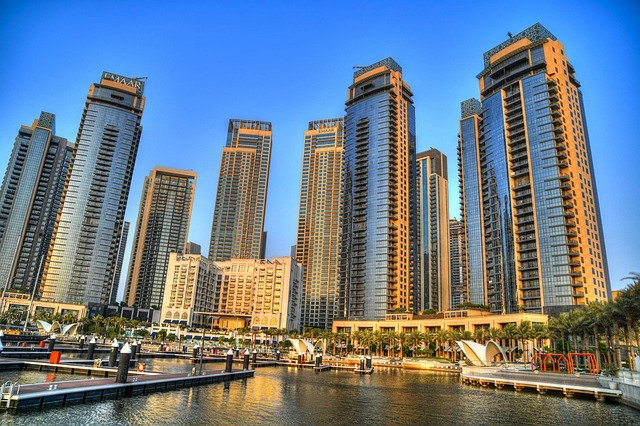
By 2024–2025, the UAE real estate sector will have matured into a transparent, stable, globally respected investment destination. Strong regulations, long-term residency programs, and a focus on innovation ensured sustainable growth. New master communities like Dubai Creek Harbour, Dubai South, and Tilal Al Ghaf embraced green urban planning and next-generation smart technologies.
The UAE had completed one of the world’s most inspiring journeys — from desert beginnings to global real estate dominance.
